2026-06-10 · 4 min read
When pain persists: what modern pain science says
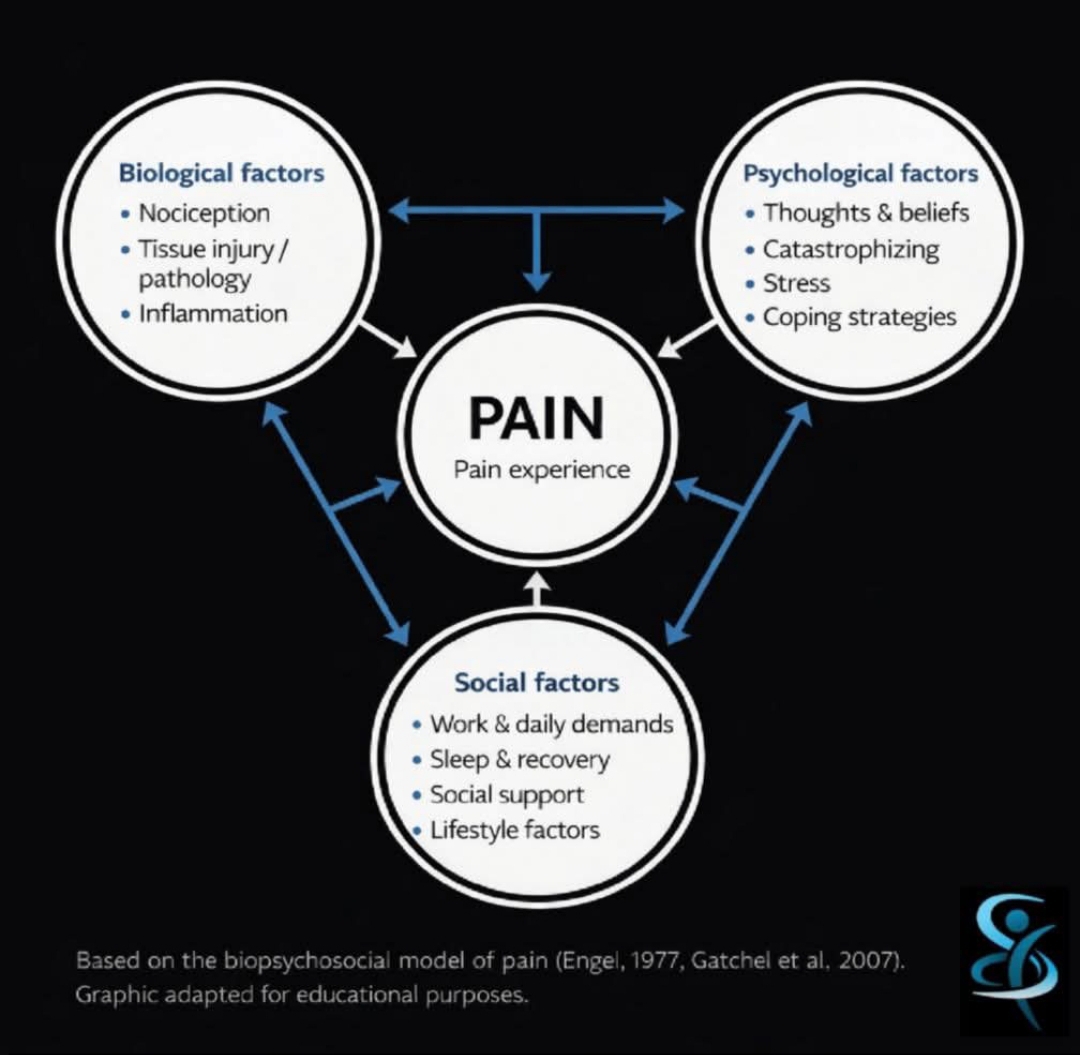
Pain is a protective output, not a damage meter. In persistent pain the protective system becomes more sensitive, so ordinary movements can hurt long after tissues have healed.
That does not make the pain imaginary. It makes it a nervous-system problem as much as a tissue problem, and it explains why sleep, stress and confidence change symptoms so noticeably.
Treatment works best when it addresses all three layers of the biopsychosocial model: hands-on therapy to restore comfortable movement, graded loading to rebuild trust and capacity, and education so that flare-ups stop being frightening.
Progress is usually measured in what you can do again - walking further, sleeping through the night, returning to the court - rather than in a pain score alone.